.jpg)
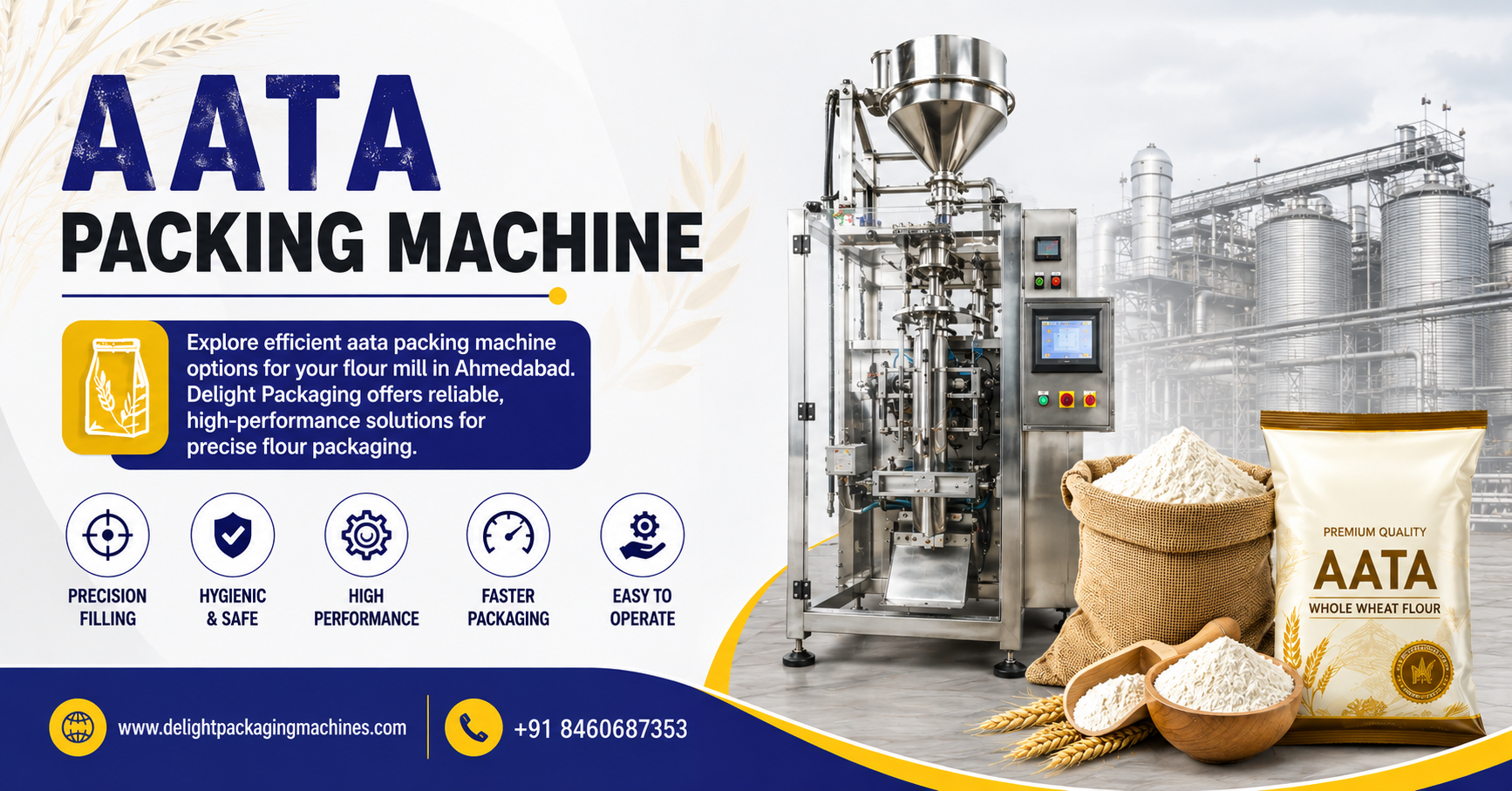
Aata packing machine
Explore efficient aata packing machine options for your flour mill in Ahmedabad. Delight Packaging offers reliable, high-performance solutions for precise flour
Why This Matters in Ahmedabad
Ahmedabad stands as a significant industrial and commercial hub, particularly within the food processing sector in Gujarat. The region hosts numerous flour mills, food manufacturers, and agricultural processing units that depend on efficient packaging solutions. With a growing population and increasing urbanization, the demand for hygienically packed flour products is consistently high. Local availability of advanced aata packing machines and responsive technical support is crucial for these businesses to maintain competitive edge and operational continuity.
What Is an Aata Packing Machine — Overview
An aata packing machine is specialized equipment designed to accurately weigh, fill, and seal flour into various types of pouches or bags. These machines are engineered to handle fine, free-flowing powders like wheat flour, gram flour, or rice flour with precision. They typically employ auger filling mechanisms or load cell-based weighing systems to ensure consistent fill weights, minimizing product giveaway and maximizing efficiency. The primary goal is to automate the packaging process, enhancing speed, accuracy, and hygiene compared to manual methods.
Key Features and Technical Specifications
- Precision Auger Filling System: Ensures accurate volumetric or gravimetric filling of fine powders.
- Load Cell Weighing Technology: Provides high accuracy for consistent fill weights, reducing product loss.
- Food-Grade Stainless Steel Construction (SS304/316): Guarantees hygiene and prevents contamination of food products.
- Programmable Logic Controller (PLC) Interface: Offers intuitive control and customization of packaging parameters.
- Variable Speed Drives: Allows adjustment of packing speed to match production requirements.
- Automatic Pouch Forming, Filling, and Sealing: Integrates multiple steps into a seamless, automated process.
- Dust Extraction System: Minimizes airborne flour particles, improving workplace hygiene and safety.
- Nitrogen Flushing Capability: Extends product shelf life by reducing oxygen exposure inside the package.
Industrial Applications and Use Cases
- Wheat Flour Mills: Packaging various grades of wheat flour for retail and wholesale.
- Gram Flour (Besan) Production: Efficiently packing gram flour into consumer-sized pouches.
- Rice Flour and Maize Flour Processing: Handling different types of grain flours for diverse culinary uses.
- Spice Powder Packaging: Suitable for fine spice powders requiring precise filling.
- Milk Powder and Dairy Substitutes: Packaging powdered dairy products under hygienic conditions.
- Chemical Powder Industries: Filling non-food grade powders where accuracy is paramount.
- Pharmaceutical Granulation: Packaging granulated pharmaceutical products with strict weight control.
- Cattle Feed and Pet Food Powders: Handling bulk packaging of powdered animal feeds.
How to Choose the Right Aata Packing Machine
- Assess Production Capacity: Determine the required output in pouches per minute or kilograms per hour to match your operational scale.
- Evaluate Filling Accuracy: Look for machines with minimal deviation in fill weights to ensure product consistency and compliance.
- Consider Pouch Material and Size Compatibility: Verify the machine can handle your desired pouch types (e.g., laminates, films) and a range of sizes.
- Automation Level: Decide between semi-automatic options for smaller operations or fully automatic systems for high-volume production.
- Hygiene and Cleaning: Prioritize machines with easy-to-clean designs and food-grade contact parts to maintain sanitation standards.
- Supplier Reputation and Support: Choose a manufacturer known for reliable machinery, comprehensive after-sales service, and spare parts availability.
- Certifications and Standards: Confirm the machine complies with relevant industry standards and safety regulations for food processing equipment.
Quality Standards and Compliance
For any food processing equipment, adherence to stringent quality standards is non-negotiable. Aata packing machines must be constructed with food-grade materials, typically stainless steel (SS304 or SS316) for all contact parts, to prevent contamination and ensure product safety. Compliance with FSSAI guidelines in India is essential for machinery used in food packaging. Furthermore, manufacturers should follow ISO quality management systems to ensure consistent production quality and reliability. Buyers should always verify these certifications and material specifications before making a purchasing decision to safeguard their product integrity and consumer health.
Why Company Experience and Capability Matters
The longevity and technical prowess of a packaging machinery manufacturer directly impact the reliability and performance of their equipment. Delight Packaging, with its engagement in manufacturing, designing, and exporting packaging machinery since 1980, brings decades of accumulated knowledge to the field. Their extensive experience ensures a deep understanding of the intricacies involved in handling various powders, including aata. The company's substantial team of well-qualified, trained, and technically sound expert engineers provides robust technical and service support, which is vital for maintaining continuous operations. This capability extends to precise manufacturing processes, rigorous quality control, and the ability to offer customized solutions tailored to specific client needs, ensuring dependable delivery and comprehensive after-sales assistance.
Installation, Maintenance and Care Tips
Proper installation is the first step towards optimal performance. Ensure that qualified technicians perform the initial setup, calibration, and operator training. Regular cleaning of all contact parts, especially the auger and hopper, is crucial to prevent flour residue buildup and maintain hygiene. Establish a preventive maintenance schedule that includes checking for wear and tear on moving parts, lubricating components as recommended by the manufacturer, and verifying the accuracy of weighing systems. Periodically inspect seals, belts, and electrical connections. Adhering to these practices extends the machine's lifespan, ensures consistent output, and minimizes unexpected downtime.
Frequently Asked Questions
Aata packing machines are versatile and designed to handle a wide range of powdered products. This includes various types of flour such as wheat flour, gram flour (besan), rice flour, maize flour, and even specialized flours. They are also suitable for packing other fine powders like spices, milk powder, and certain chemical or pharmaceutical powders, provided the machine specifications match the product characteristics.
An auger filler typically operates on a volumetric principle, using a rotating screw to dispense a measured volume of powder. It is highly effective for non-free-flowing powders like flour. A weigher, on the other hand, uses load cells to measure the product by weight, offering higher precision for free-flowing granular products or when exact weight accuracy is paramount. Many modern aata packing machines combine these technologies for optimal performance.
Food-grade contact parts are critically important for any machine handling food products. Materials like stainless steel (SS304 or SS316) prevent contamination, resist corrosion, and are easy to clean, ensuring the packaged flour remains safe and hygienic. Using non-food-grade materials can lead to product spoilage, health risks, and non-compliance with food safety regulations, which can severely impact a business's reputation.
Most modern aata packing machines are designed with flexibility to handle a range of pouch sizes and materials. This is often achieved through adjustable settings, interchangeable forming tubes, or quick-change parts. They can typically work with various film types, including laminates, polyethylene, and polypropylene, allowing businesses to adapt to different market demands and product presentations without needing multiple machines.
A reliable packaging machine supplier should offer comprehensive after-sales support. This includes professional installation services, thorough operator training, and readily available spare parts. Technical assistance for troubleshooting, routine maintenance, and any necessary repairs should also be provided. Strong after-sales support ensures minimal downtime and helps maintain the machine's efficiency and longevity over its operational life.
Automation in flour packaging significantly enhances efficiency, accuracy, and hygiene. Automated aata packing machines can process flour at much higher speeds than manual methods, reducing labor costs and increasing overall output. They ensure consistent fill weights, minimizing product giveaway and maintaining uniform package quality. Automation also reduces human contact with the product, improving hygiene and extending shelf life.
Conclusion
Selecting the appropriate aata packing machine is a strategic decision for any flour mill aiming for efficiency, hygiene, and consistent product quality. The right machinery ensures precise filling, secure sealing, and compliance with food safety standards, all while optimizing operational costs. For businesses in Ahmedabad, partnering with an experienced manufacturer that understands local industry needs and offers robust technical support is invaluable. Prioritizing machine reliability, technical specifications, and comprehensive after-sales service will contribute significantly to long-term success in the competitive food processing market.
Get In Touch
Delight Packaging