.jpg)
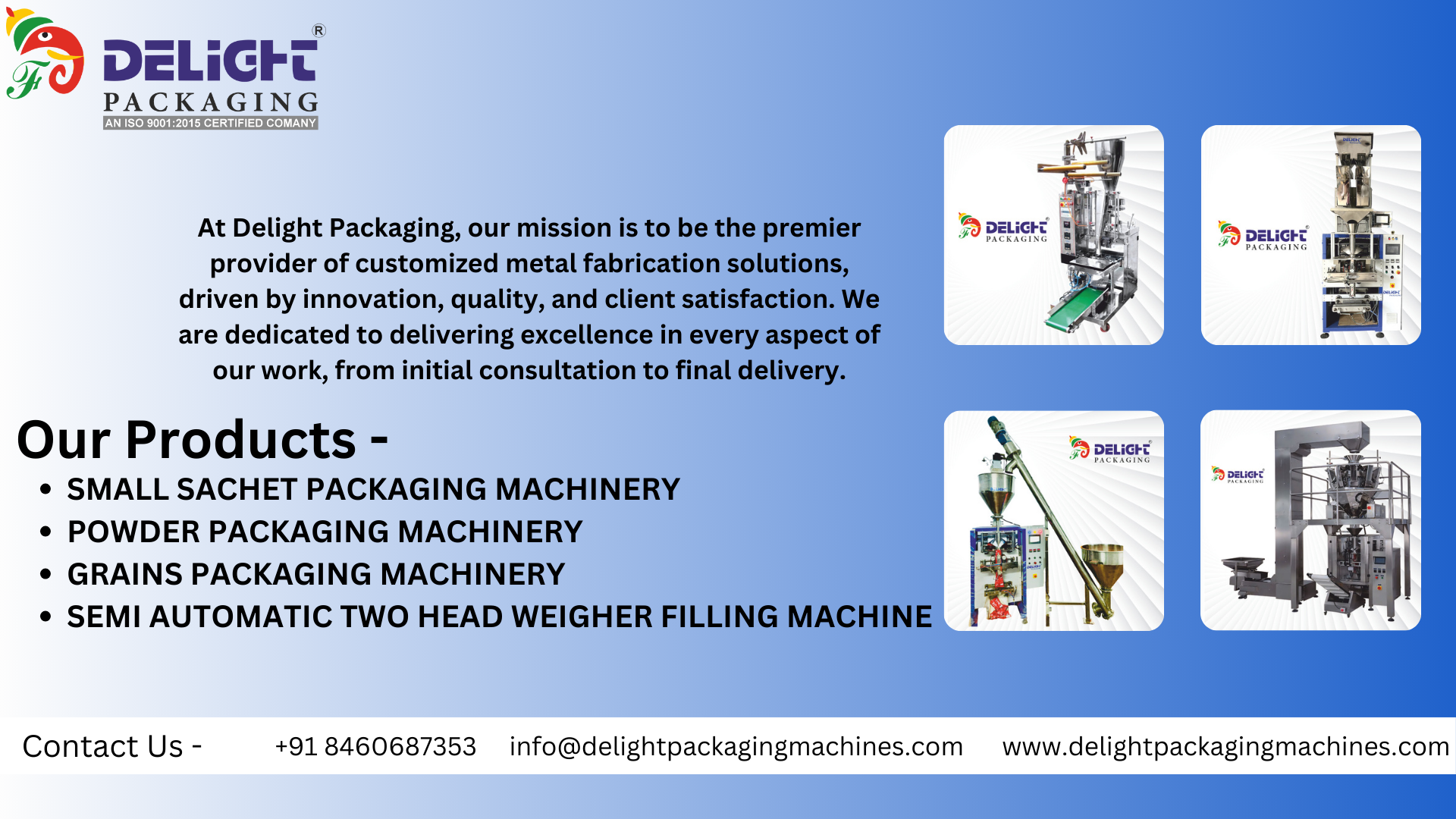
Introduction to Form Fill Seal Pouch Packing Machine
Form Fill Seal (FFS) Pouch Packing Machines automate three steps—forming a pouch from roll stock, precisely filling product, and hermetically sealing. They improve hygiene, reduce material waste, and boost output for powders, granules, liquids, and pastes. From food and FMCG to chemicals and pharma, an FFS system standardizes packaging quality while lowering unit costs and manpower needs. For related solutions and integration ideas, explore Delight Packagingmachines for practical guidance and options.
Working Principle and Process Flow of Form Fill Seal Pouch Packing Machine
An FFS machine unwinds laminated film, forms it into a tube or pouch, and creates bottom/vertical seals. The dosing system—auger, volumetric cup, piston, or multihead weigher—dispenses exact product quantity. Finally, jaws seal and cut individual pouches, printing and coding inline as required. PLC/HMI controls synchronize temperature, speed, and sealing pressure for consistent packs. Learn more about integration and line layouts at Delight Packagingmachines.
Types of Form Fill Seal Pouch Packing Machine
- Vertical FFS (VFFS) – ideal for sachets and pillow pouches; best for powders, snacks, and granular FMCG lines.
- Horizontal FFS (HFFS) – suitable for flat/gusset pouches and higher speeds; excels with fragile items and shaped packs.
- Liquid FFS – specialized sealing and nozzles for milk, oils, beverages; hygienic contact parts and drip-free dosing.
- Collar-Type VFFS – compact footprint with forming collar; servo pulls for tight registration and quick format changeovers.
- Multi-Lane Sachet FFS – multiple lanes increase throughput; excellent for small-dose pharma, condiments, and samples.
Key Features and Specifications of Form Fill Seal Pouch Packing Machine
- Output up to 20–120 packs/min, depending on product, film, lane count, and pouch size range.
- High dosing accuracy using auger, cups, piston, or multihead weighers; reduces giveaway and material costs.
- Food-grade SS304 contact parts with interlocks, overheat protection, and compliant guarding for operator safety.
- PLC with HMI, PID temperature control, encoder-based pull, and recipe memory for rapid repeatable changeovers.
- Low maintenance with modular assemblies; supports date coding, nitrogen flushing, and various laminate films.
Applications of Form Fill Seal Pouch Packing Machine
- Snack foods, pulses, rice, spices, and bakery premixes packed into consistent pillow or gusset pouches, improving shelf life, inventory handling, and retail presentation across supermarkets and modern trade environments.
- Liquids such as milk, juice, edible oils, and sauces packed in leak-resistant pouches, improving hygiene, speed, and cold-chain compatibility while reducing transport costs through compact, stackable formats.
- Detergent powders, agrochemicals, pet food, and seeds delivered in durable laminates with precise seals, aiding compliance, tamper evidence, and long-term storage stability in varied climatic conditions.
- Pharma and nutraceutical sachets for ORS, protein mixes, and supplements, ensuring accurate micro-dosing, batch traceability, and convenient single-use portability for clinics, e-commerce parcels, and field sales.
Benefits of Using Form Fill Seal Pouch Packing Machine
- Lower cost per pack through film roll usage, reduced product giveaway, and less rework; robust design extends machine lifespan and minimizes unplanned downtime for better ROI.
- Consistent pouch quality with tight temperature control and servo pulls; uniform seals and print registration enhance brand perception and reduce market complaints.
- Significant manpower savings with automated forming, dosing, sealing, and cutting; quick recipe recall shortens changeovers and increases daily productive time.
- Easy scalability from single to multi-lane lines; optional nitrogen flushing and GMP contact parts support safety, compliance, and export readiness across industries.
Top Manufacturers and Suppliers in India
India hosts a mature ecosystem of Form Fill Seal pouch packing solutions, ranging from compact entry-level VFFS units to high-speed multi-lane sachet systems. Buyers typically find stainless-steel construction, PLC/HMI controls, temperature-regulated sealing, and compatible dosing options as standard. Vendors commonly provide installation, operator training, and spares support, with options for nitrogen flushing, date coding, and batch printing. Regional service networks and readily available consumables help maintain uptime. When evaluating suppliers, compare throughput, accuracy, film compatibility, safety interlocks, and documented after-sales support to match production goals and regulatory needs.
Maintenance and Safety Tips
- Check film path, rollers, and sealing jaws daily for residue, misalignment, or wear before starting production.
- Clean contact parts after each shift; lubricate chains, gears, and bearings as per OEM intervals and grades.
- Verify dosing calibration and temperature set-points at changeover; run test pouches to validate accuracy.
- Train operators on lockout/tagout, hot-surface cautions, and emergency stops; keep guards closed during runs.
- Maintain critical spares—heaters, thermocouples, belts, and sensors—labeled and ready for quick replacement.
FAQs – Form Fill Seal Pouch Packing Machine
Contact Details
Talk to our specialists today for tailored solutions and fast assistance.