.jpg)
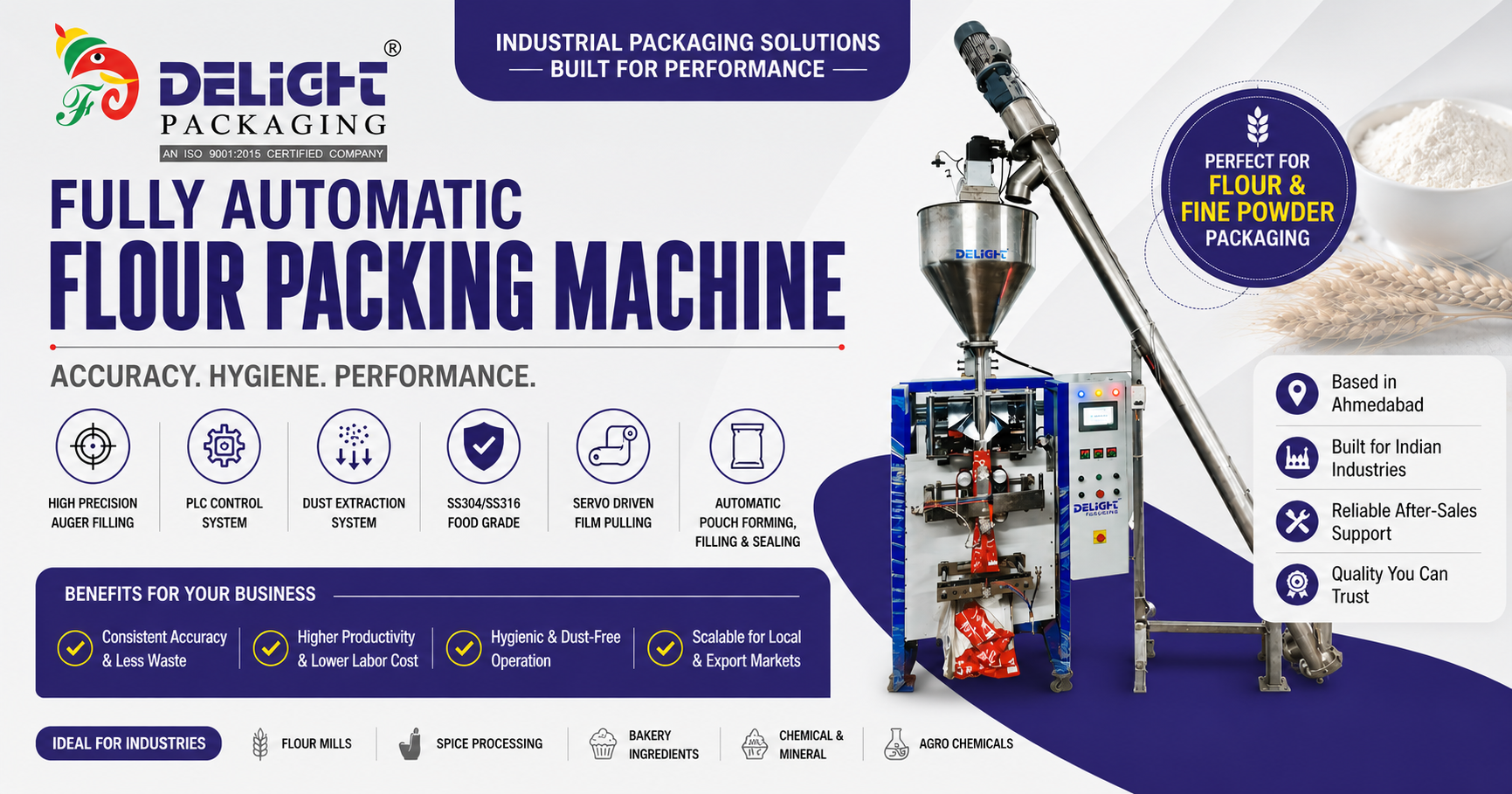
Fully Automatic Flour packing machine
Optimize your production line with a fully automatic flour packing machine in Ahmedabad. Improve accuracy, reduce waste, and scale your packaging operations.
Why This Matters in Ahmedabad
Ahmedabad has long been a hub for industrial manufacturing and food processing, with a dense network of flour mills and grain processing units. As the local market demands higher throughput and more hygienic packaging solutions, the reliance on manual bagging is decreasing. Businesses in the Odhav and Kathwada industrial belts are increasingly seeking equipment that can handle the specific challenges of flour, such as dust control and consistent density management. Investing in local, reliable packaging technology allows these businesses to meet both regional demand and export requirements without the logistical headaches of sourcing specialized machinery from distant regions.
What is a Fully Automatic Flour Packing Machine — Overview
A fully automatic flour packing machine is an integrated system designed to handle the entire packaging cycle without human intervention. It typically includes an auger filler, which is the most effective mechanism for handling fine, non-free-flowing powders like flour. The process begins with the machine drawing film from a roll, forming the pouch, filling it with a precise weight of flour, and sealing it securely. These machines are engineered to manage the dusty nature of flour, ensuring that the sealing area remains clean to prevent leaks or compromised packaging.
Key Features and Technical Specifications
High-precision auger filling system designed for consistent volumetric or weight-based dosing.
Integrated PLC-based control panel for precise adjustment of fill weights and machine speed.
Dust-extraction ports to maintain a clean working environment and prevent powder accumulation.
Stainless steel contact parts (SS304/SS316) to meet food-grade safety and hygiene standards.
Servo-driven film pulling mechanism for accurate pouch length and registration.
Automatic pouch forming, filling, and sealing in a single, continuous cycle.
Compatibility with various heat-sealable laminated films and pouches.
Industrial Applications and Use Cases
Commercial flour mills producing wheat, gram, or multi-grain flour for retail distribution.
Spice processing units that require similar powder-handling capabilities for fine-milled products.
Bakery ingredient suppliers packaging premixes and specialized baking powders.
Chemical and mineral processing plants that package fine powders requiring dust-free sealing.
Agro-chemical facilities handling powdered fertilizers or pesticides that demand hermetic seals.
How to Choose the Right Product
Selecting the appropriate packaging equipment requires a clear understanding of your current output and future growth projections. Consider the following factors before finalizing your investment:
- Capacity Requirements: Evaluate your bags-per-minute (BPM) needs to ensure the machine matches your production line speed.
- Pouch Style: Determine if you need center-seal, stand-up pouches, or gusseted bags, as this affects the machine’s forming assembly.
- Material Compatibility: Ensure the auger design is suitable for the specific density and flow characteristics of your flour type.
- After-Sales Support: Prioritize suppliers who offer local technical support and readily available spare parts.
- Customization: Verify if the machine can be integrated with secondary equipment like coders, conveyors, or check-weighers.
Quality Standards and Compliance
In the food processing sector, equipment must adhere to stringent hygiene and safety protocols. A high-quality flour packing machine should be constructed using food-grade stainless steel to prevent corrosion and contamination. Buyers should look for machines that comply with relevant IS (Indian Standards) and international safety certifications. Verification of the manufacturer’s quality management systems, such as ISO certifications, provides assurance that the machine is built to withstand the rigors of daily industrial use while maintaining consistent performance.
Why Company Experience and Capability Matters
The technical complexity of packaging fine powders means that experience is a critical asset. At Delight Packaging, the focus is on engineering solutions that address the specific physical properties of flour, such as its tendency to bridge or create dust. With decades of experience since 1980, the technical team understands that a machine is only as good as its maintenance and support structure. A manufacturer with a deep understanding of mechanical design, electrical integration, and long-term serviceability ensures that your investment remains operational for years, minimizing downtime and maximizing your return on investment.
Installation, Maintenance and Care Tips
Proper installation and routine care are essential to ensure the longevity of your packaging equipment. Always ensure the machine is placed on a level, vibration-free surface to maintain weighing accuracy.
- Daily Cleaning: Remove residual flour dust from the auger and sealing jaws at the end of every shift to prevent buildup.
- Lubrication: Follow the manufacturer’s schedule for lubricating moving parts to reduce friction and wear.
- Sensor Calibration: Periodically check and calibrate sensors to ensure accurate film registration and weight detection.
- Electrical Checks: Inspect wiring and connections regularly to prevent issues caused by dust ingress or power fluctuations.
Frequently Asked Questions
The auger filler is specifically designed to handle fine powders that do not flow easily. Unlike gravity-based fillers, the auger uses a rotating screw mechanism to push a precise volume of flour into the pouch. This ensures consistent weight accuracy and prevents the powder from clogging or bridging, which is a common issue with other types of filling systems.
High-quality machines incorporate specialized dust-extraction systems and enclosed filling heads. By creating a slight negative pressure or using efficient seals around the filling nozzle, the machine prevents fine particles from settling on the sealing jaws. This ensures that the heat-seal remains strong and airtight, which is vital for maintaining the freshness and shelf life of the flour.
Yes, most modern automatic packing machines are designed with adjustable parameters. You can modify the pouch length through the control panel and change the auger screw or timing to adjust the fill weight. While there are physical limits to the range of bag sizes a single machine can handle, they offer significant flexibility for businesses that produce multiple product variants.
Routine maintenance involves cleaning the contact parts, checking the sealing jaws for wear, and ensuring that the film-pulling belts are properly tensioned. It is also important to keep the electrical cabinet free of dust and to periodically calibrate the weighing sensors. A proactive maintenance schedule significantly reduces the risk of unexpected downtime during peak production cycles.
Absolutely. These machines are designed to be modular. They can be easily integrated with upstream equipment like bucket elevators or screw conveyors, and downstream equipment such as batch coders, check-weighers, and take-away conveyors. This integration creates a seamless, end-to-end automated production line that minimizes manual handling and increases overall operational efficiency.
The installation time depends on the complexity of the setup and the integration with existing infrastructure. Generally, a professional installation team can complete the setup, calibration, and operator training within a few days. The goal is to ensure that the machine is perfectly aligned with your specific production environment and that your staff is fully trained on operation and basic troubleshooting.
Conclusion
Transitioning to a fully automatic flour packing machine is a strategic move for any business looking to improve efficiency and product quality. By focusing on precision, hygiene, and reliable engineering, you can streamline your production line and meet the growing demands of your customers. When selecting your equipment, prioritize manufacturers who offer robust technical support and a proven track record in the industry. Investing in the right technology today ensures that your operations remain competitive and scalable for the future.
Get In Touch
Delight Packaging