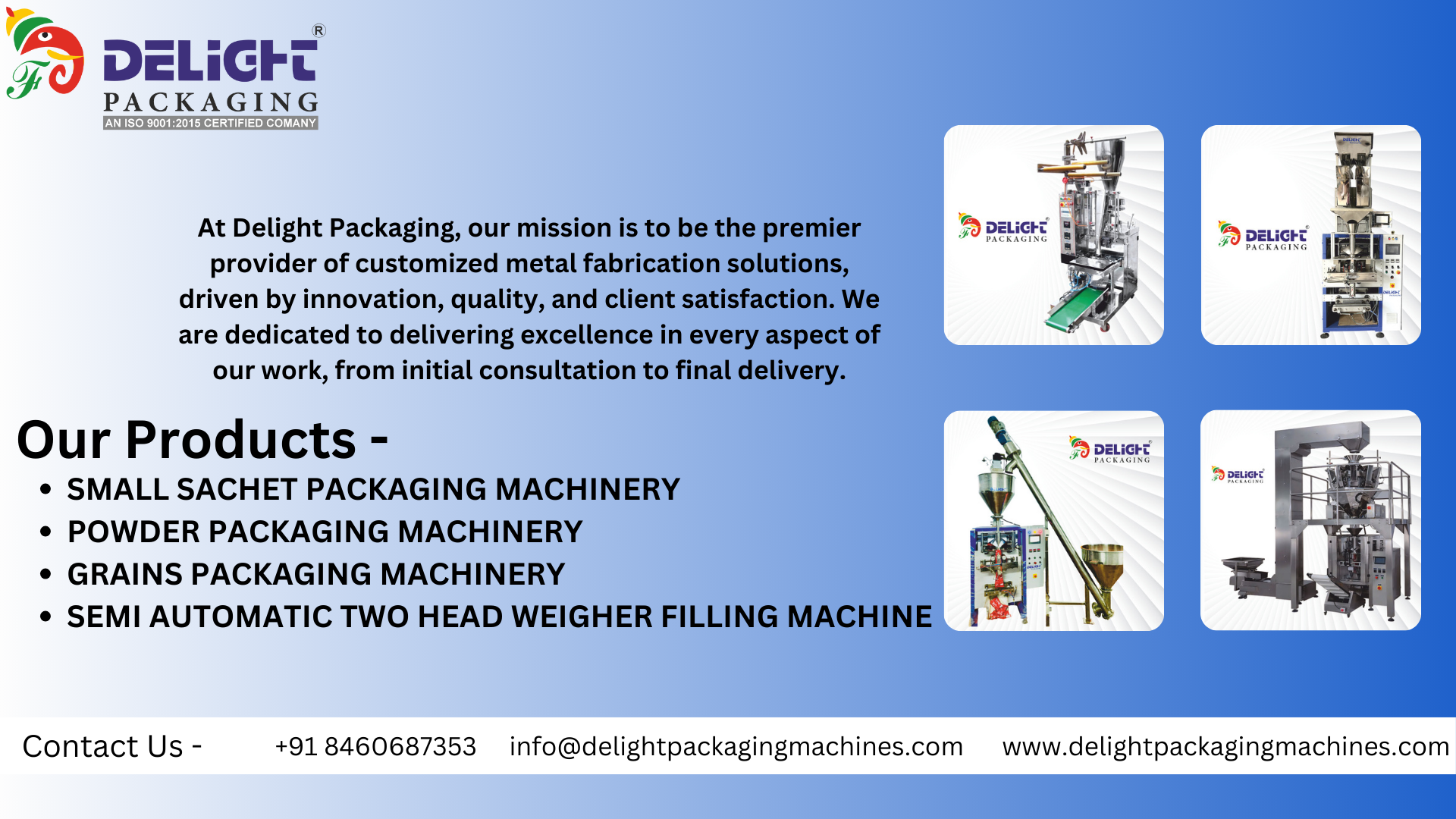
Introduction to High-Speed Pouch Packing Machines for Food Products
High-speed pouch packing machines for food products automate filling and sealing for snacks, powders, granules, liquids, and ready-to-eat items. They improve hygiene, consistency, and throughput while cutting manual errors and wastage. With servo-driven dosing, integrated date coding, and MAP options, these lines help brands meet safety norms and shelf-life goals. Modular configurations support doypacks, three-side, four-side, and center-seal formats with quick tool-less changeovers. For guidance on specifying capacities, pouch styles, and add-ons, see this helpful resource on food packaging automation.
Working Principle and Process Flow of High-Speed Pouch Packing Machines for Food Products
Product is conveyed to a measured dosing system (auger, multihead weigher, volumetric cup, piston, or flow meter). Blank film or pre-made pouches are indexed, opened, and presented to the filling station. Sensors verify pouch presence and tare; the dose is dispensed precisely, followed by sealing under controlled heat, pressure, and time. Optional gas flushing, nitrogen dosing, and check-weighers ensure quality. Date/batch coding and rejection bins handle off-spec packs. Finished pouches exit via discharge conveyors for boxing. For deeper specifications and layout ideas, refer to packaging solutions.
Types of High-Speed Pouch Packing Machines for Food Products
- Vertical Form Fill Seal (VFFS) systems for snacks and powders; ideal for high throughput center-seal or pillow pouches.
- Horizontal Form Fill Seal (HFFS) lines for premium doy/quad-seal pouches needing strong shelf presence and hermetic seals.
- Pre-made pouch rotary machines for frequent changeovers, supporting zippers, spouts, and varied pouch sizes.
- Multi-lane sachet machines for condiments, sugar, coffee, and pharma-style single serves with compact footprint.
- Liquid/viscous pouch fillers with piston or gear pumps for juices, sauces, purées, and dairy applications.
Key Features and Specifications of High-Speed Pouch Packing Machines for Food Products
- Throughputs up to 60–180 pouches per minute per lane, depending on product rheology and pouch format.
- Servo-driven dosing with ±0.3–1.0% accuracy to minimize giveaway and ensure consistent net weights.
- Food-grade contact parts in SS304/SS316, tool-less changeovers, interlocked guards, and CE-aligned safety.
- PLC+HMI controls, recipe memory, auto-tuning temperature PID, and integrated print/applicator options.
- Easy sanitation design with smooth welds, CIP/SIP readiness for select models, and long-life sealing jaws.
Applications of High-Speed Pouch Packing Machines for Food Products
- Snack foods such as namkeen, chips, and extrudates where fast changeovers, accurate weighing, and tight seals reduce crumbs, rework, and moisture ingress in high-volume plants.
- Powders like spices, masalas, coffee, milk powder, and instant mixes requiring dust-controlled dosing, de-aeration, and date coding for consistent flow and shelf stability.
- Liquids and viscous foods including sauces, ketchup, edible oils, and dairy where drip-free filling and hygienic contact parts improve compliance and reduce contamination risk.
- Ready-to-eat and frozen foods needing attractive doy/quad pouches, MAP, and robust seals that unlock longer shelf-life, better cube-utilization, and distribution efficiency.
Benefits of Using High-Speed Pouch Packing Machines for Food Products
- Higher OEE with fewer stoppages, reduced product giveaway, and lower labor dependence, delivering rapid payback and predictable cost per pouch across shifts.
- Precision dosing and temperature-stable sealing produce uniform packs, improving brand perception, customer trust, and retail acceptance across diverse geographies.
- Quick tool-less changeovers and recipe memory compress downtime, enabling short runs, multi-SKU days, and agile promotions without sacrificing output.
- Compliance-friendly design supports HACCP, GMP, and FSSAI goals; guarding, interlocks, and traceability features enhance operator safety and audits.
Top Manufacturers and Suppliers in India
India hosts a mature ecosystem of pouch packaging solution providers offering VFFS, HFFS, rotary pre-made pouch, and multi-lane sachet platforms. Typical offerings include servo dosing, nitrogen flushing, check-weighing, printers, and vision checks. Vendors generally provide application labs for trials, format parts, and AMCs for uptime assurance. Lead times vary by customization, while nationwide service networks support installation, training, and spares. Buyers commonly evaluate film compatibility, sealing jaw design, per-SKU speeds, sanitation features, and integration with upstream/downstream conveyors. With abundant options, it’s practical to shortlist by product category, hygiene needs, and target OEE before technical demos and FATs.
Maintenance and Safety Tips
- Verify sealing jaw faces, Teflon tapes, and heater uniformity at start and end of every shift.
- Clean product contact parts and dosing paths daily; lubricate bearings and chains per OEM schedule.
- Calibrate weighers, augers, and temperature PIDs weekly; validate check-weigher and rejection accuracy.
- Train operators on lockout-tagout, hot-surface hazards, and emergency stops before independent operation.
- Stock critical spares—belts, sensors, Teflon, knives—and document preventive maintenance intervals.
FAQs – High-Speed Pouch Packing Machines for Food Products
Contact Details
Talk to our specialists today for tailored solutions and fast assistance.