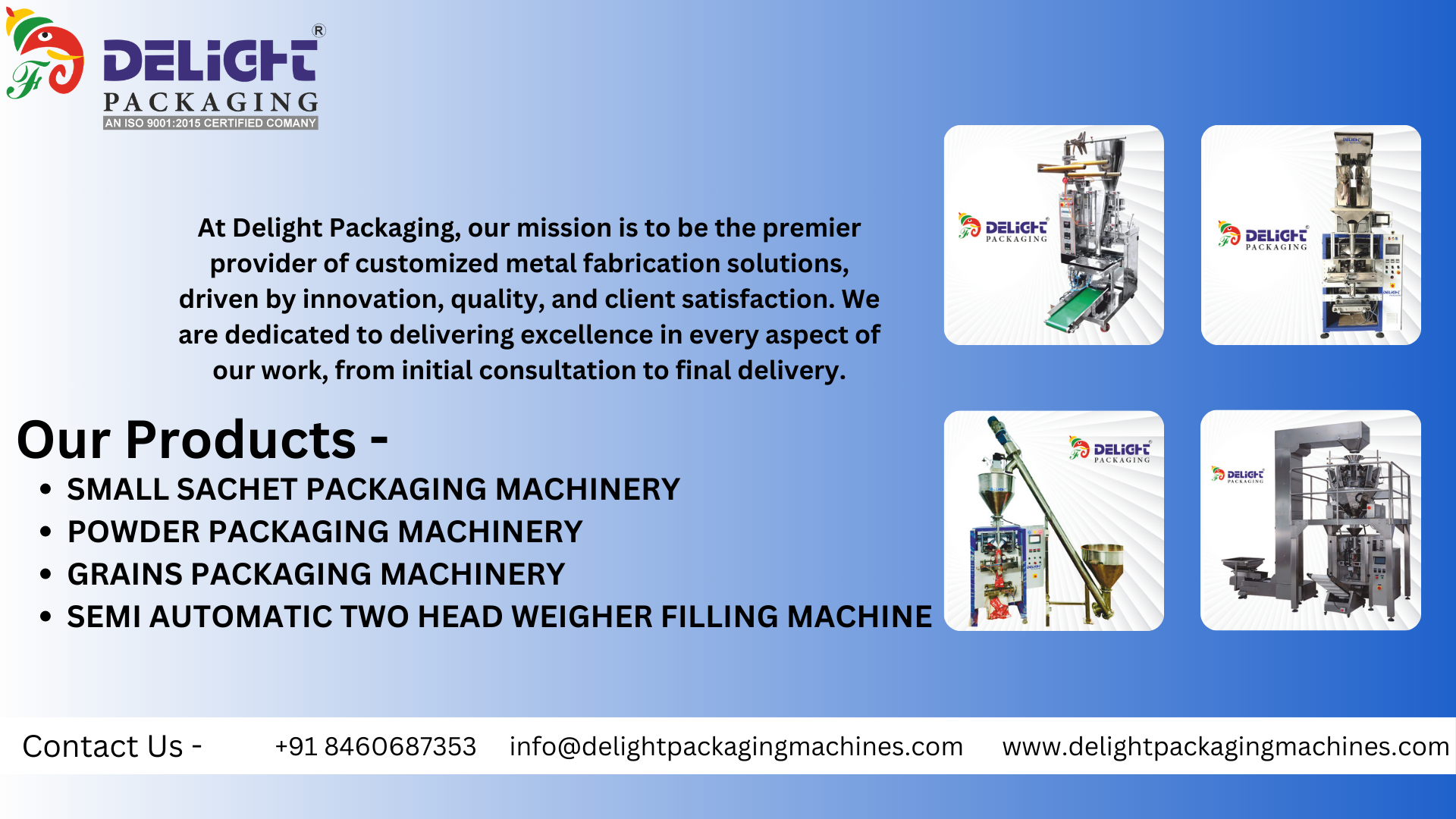
Rotary Pouch Packing Machine
Introduction to Rotary Pouch Packing Machine
A rotary pouch packing machine is an automated solution for filling and sealing pre-formed pouches at high speed with consistent accuracy. Widely used across food, FMCG, agro-chemicals, and pharmaceuticals, it reduces labor, improves hygiene, and delivers retail-ready packs. Its indexing rotary turret handles functions like pouch pick-up, opening, dosing, sealing, and discharge within a compact footprint. With quick changeovers and recipe controls, brands can run multiple SKUs on one line. For project guidance and tailored specifications, explore Delight Packagingmachines solutions.
Working Principle and Process Flow of Rotary Pouch Packing Machine
The system uses a rotary indexing turret with multiple stations. Pouches are automatically picked from a magazine, opened by vacuum and air jets, and verified by sensors. Product is dosed via auger, volumetric cup, multi-head weigher, or liquid pump. The machine heat-seals, codes, trims, and discharges finished packs. PLC-HMI controls manage temperature, timing, and alarms for consistent sealing integrity. Learn how these steps integrate with upstream conveyors and downstream checkweighers via our integration overview.
Types of Rotary Pouch Packing Machine
- Rotary pre-made pouch filler–sealer for snacks, powders, and granules; ideal for frequent SKU changeovers and retail pouches.
- Rotary liquid pouch packer with servo gear pump for sauces, oils, and beverages; ensures drip-free, sanitary filling.
- Multi-lane rotary with 6–10 stations, supporting higher output and compact layouts for fast-moving consumer goods.
- Vacuum/nitrogen flush rotary for extended shelf-life packs; integrates MAP for oxygen-sensitive products.
- Hygienic stainless-steel rotary in IP65, suitable for pharmaceuticals, nutraceuticals, and wash-down environments.
Key Features and Specifications of Rotary Pouch Packing Machine
- Output up to 30–60 pouches per minute per head, depending on product, pouch size, and dosing system.
- ±0.5–1.5% filling accuracy via servo auger, multi-head weigher, or flow-metered pump with recipe memory.
- Food-grade SS304/SS316 contact parts, guarded enclosures, interlocks, and CE-aligned safety circuits.
- 7–10 station rotary turret with PLC-HMI, auto temperature control, date coding, and reject-on-fault logic.
- Tool-less changeover, low-maintenance bearings, readily available spares, and remote diagnostic readiness.
Applications of Rotary Pouch Packing Machine
- Snacks, namkeen, dry fruits, and confectionery pouches where attractive retail presentation, accurate weights, and tamper-evident seals drive shelf appeal in supermarkets and modern trade environments.
- Powders such as spices, coffee, protein blends, flour, and premixes, delivering consistent dosages with clean sealing for better hygiene, throughput, and minimal rework in high-volume plants.
- Liquids and semi-liquids like sauces, edible oils, shampoos, and detergents with leak-proof seals, meeting labeling, traceability, and food-safety compliance for national distribution.
- Agro-chemicals, seeds, and pet foods where nitrogen flushing, sturdy laminate pouches, and robust seals ensure product freshness, longer shelf life, and reduced logistics damage.
Benefits of Using Rotary Pouch Packing Machine
- Higher ROI through reduced manpower, fewer rejects, and faster changeovers; compact footprint enables more packs per shift without expanding production space or utilities significantly.
- Consistent quality with precise dosing, stable temperatures, and uniform dwell times to achieve repeatable seal strength, correct net-weights, and strong brand presentation across batches.
- Time savings from automated pouch handling, inline coding, and integrated rejection—cutting manual touchpoints and speeding line clearance during SKU or size changes.
- Scalable architecture supporting additional stations, MAP options, and serialization; built-in safety interlocks and guarding improve compliance with industry standards.
Top Manufacturers and Suppliers in India
India hosts a mature ecosystem for rotary pouch packing machines, ranging from MSME specialists to export-oriented OEMs. Typical offerings include pre-made pouch fillers for powders, granules, and liquids with PLC-HMI controls, stainless-steel contact parts, and integration with multi-head weighers, auger fillers, or pumps. Vendors usually provide onsite commissioning, operator training, and post-sale service with stocking of critical spares. Buyers can select pouch sizes, station counts, nitrogen flushing, coding, and inspection options to match hygiene levels and throughput goals. Evaluate build quality, support responsiveness, warranty terms, and acceptance trials before finalizing procurement.
Maintenance and Safety Tips
- Inspect belts, grippers, vacuum pads, and sensors daily; replace worn parts before drift impacts seal integrity.
- Clean product contact zones and seal jaws after each shift; remove residues to prevent contamination and sticking.
- Verify temperature setpoints, sealing pressure, and filler calibration weekly; record trends to anticipate deviations.
- Train operators on lockout-tagout, emergency stops, guarding, and hot-surface awareness to minimize incidents.
- Maintain a spare-parts kit for belts, heaters, thermocouples, pads, and fuses; log usage and re-order proactively.
FAQs – Rotary Pouch Packing Machine
Contact Details
Talk to our specialists today for tailored solutions and fast assistance.